InfluenceMap’s COP platform is now updated with the latest analysis from InfluenceMap’s LobbyMap platform - assessing anti-transition narratives circulated by the oil and gas industry in the run-up to COP30. This press release highlights four key new statistics drawn from analysis on the platform.
InfluenceMap's LobbyMap platform was one of 120 initiatives chosen by the Government of Brazil—through the COP30 Presidency Muritao initiative and the Global Initiative on Information Integrity—to be included in the COP30 Presidency's Solution Bank, a portal created by the COP30 Presidency to highlight practical initiatives that generate concrete results in relation to the 30 Key Objectives of the Action Agenda.
1. Between COP29 and COP30, oil and gas companies and their industry associations were, on average, a third more active in using misleading narratives about the energy transition than they were in the year preceding COP29.
Industry associations remain the primary vehicle through which the fossil fuel industry amplifies its messaging, deploying these narratives more intensively than individual companies and coordinating their use worldwide. Over a quarter of the fossil fuel companies and industry associations found to be promoting these narratives attended COP29, and are expected to attend COP30.
2. In the last year, the use of narratives by the fossil fuel industry that emphasize the benefits of fossil gas for affordability and energy security have overtaken the use of arguments that emphasize limitations and uncertainties of alternative solutions, capitalizing on the political moment to falsely argue that fossil fuels are a necessary part of the energy mix.
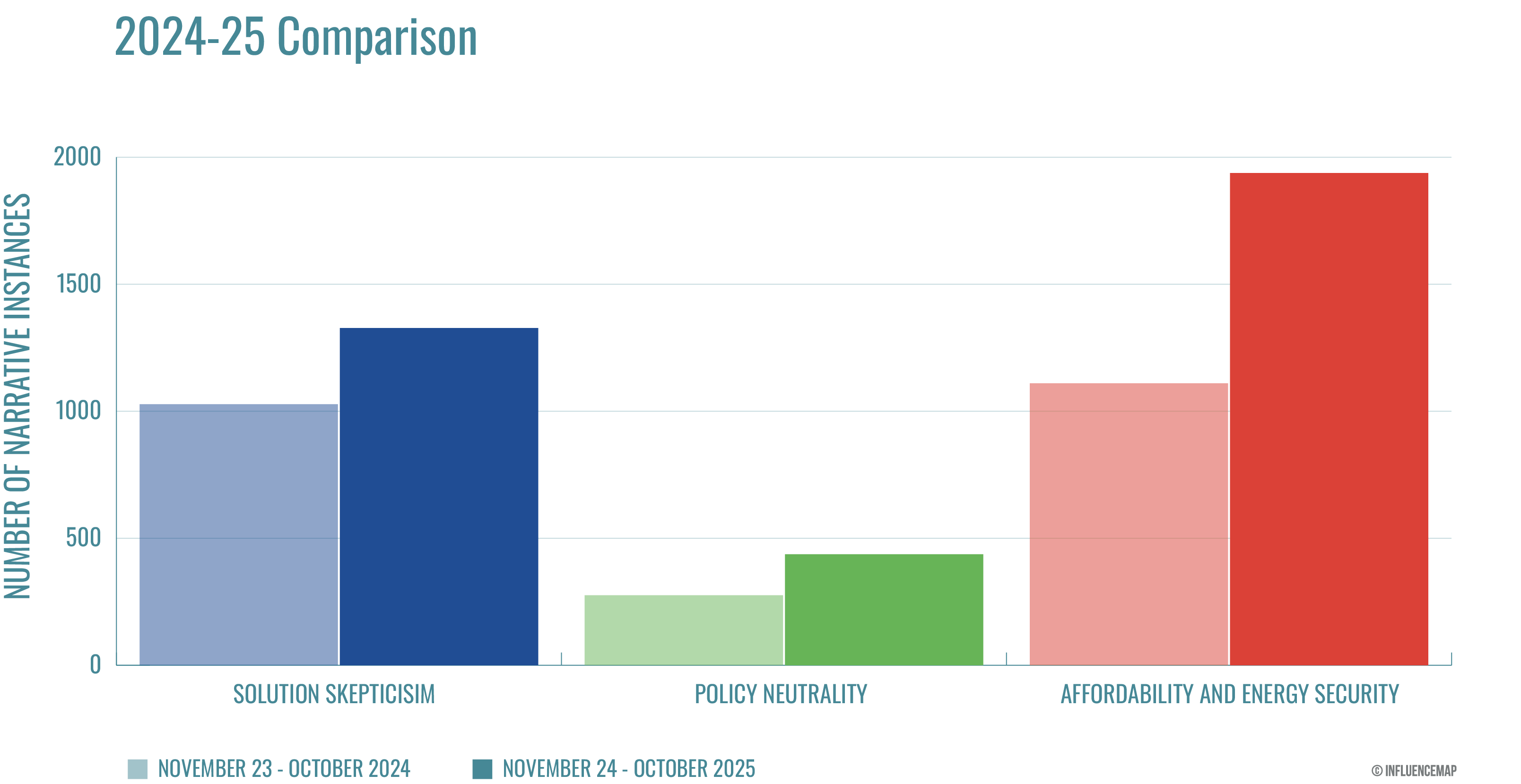
This trend has emerged from a new assessment using narrative groups identified in previous InfluenceMap work. InfluenceMap's 2024 report found these same three anti-transition narratives had been repeated by the oil and gasThis trend has emerged from a new assessment using narrative groups identified in previous InfluenceMap work. InfluenceMap's 2024 report found these same three anti-transition narratives had been repeated by the oil and gas industry since as early as 1967. Each of the three narratives is misaligned with science-aligned policy pathways set out by the IPCC.
3. Almost two-thirds (64.5%) of misleading narratives from the fossil fuel industry around the energy transition were used in CEO messaging or direct engagement with policymakers.
This demonstrates that these narratives are not incidental PR, but deliberate, high-level strategies aimed at shaping the policy environment in which these companies operate. CEOs are the most powerful lobbyists companies have, with the best access and the best networks. Many of the oil and gas companies attending COP will be represented by their CEOs.
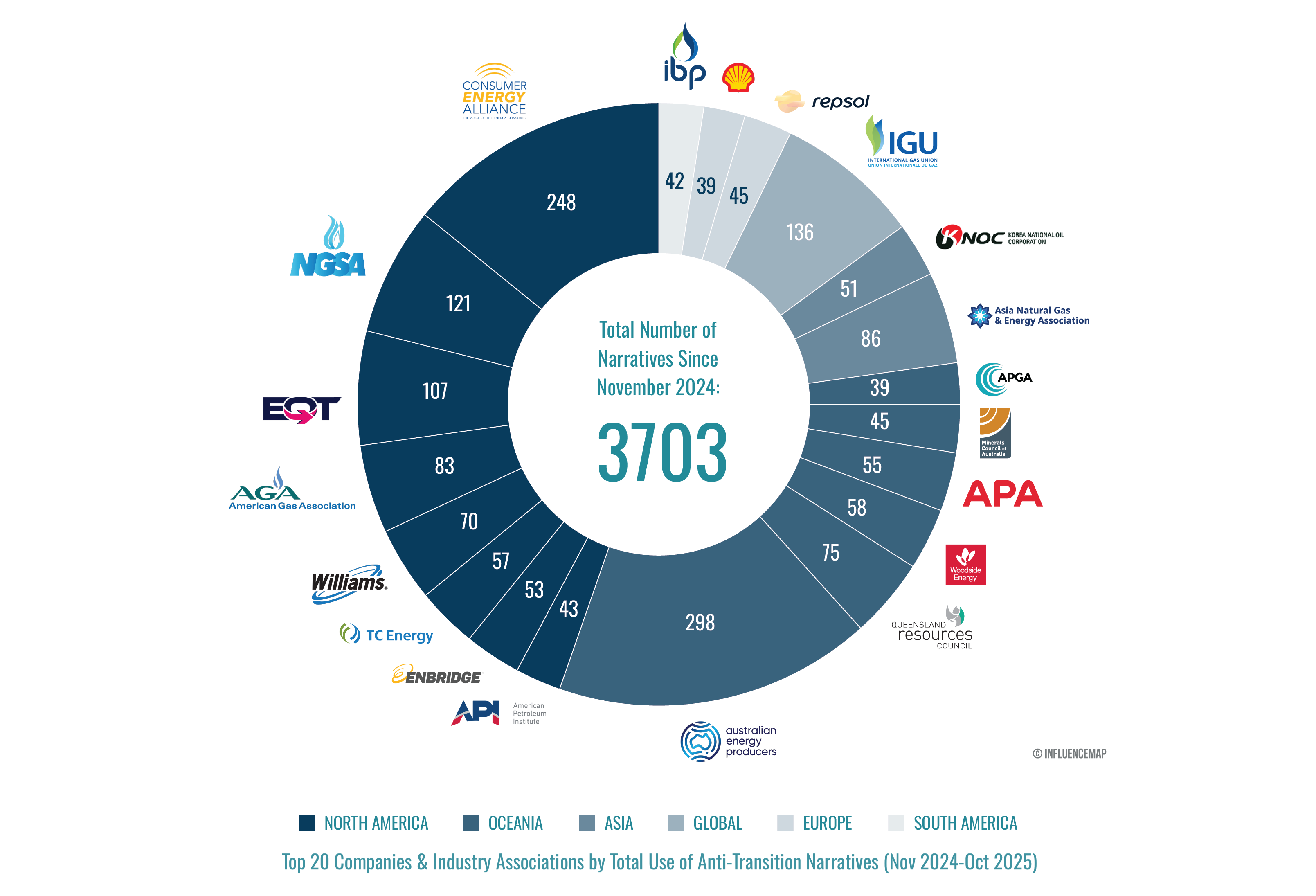
4. In the last year, InfluenceMap identified 42 instances of Brazil’s largest fossil fuel industry association, IBP, promoting anti-transition narratives that are misaligned with the IPCC.
InfluenceMap’s latest analysis, released last week, of the climate lobbying landscape in Brazil found that a lack of strategic corporate engagement from most of the economy has left climate policies vulnerable to vested-interest lobbying, particularly from the oil and gas and agricultural sectors, which are both the most engaged and the most negative sectors in the country. This imbalance in engagement between positive and negative actors has left regulations such as RenovaBio and the Selective Tax vulnerable to lobbying from oppositional actors, even while the Brazilian government had committed to more ambitious policies such as these as the COP30 host country. Additionally, in the run-up to COP30, oil and gas companies in the region appear to be amping up their dual strategy of seemingly supportive public messaging, combined with heavy lobbying for increased fossil fuel production.
Also published on InfluenceMap’s COP platform is a recently released report in collaboration with Transparency International – Climate Summit or Trade Industry Fair? This report finds that the vast majority (88%) of companies attending the last two COPs have not expressed a clear position in support of the Paris Agreement in that time, and 41% of companies have taken positions that do not support energy transition policies. This includes some of the world’s largest fossil fuel companies, including BP, Chevron, Equinor, Shell, and Brazilian Petrobras (whose representatives attended as part of Brazil’s national delegation as Party and Party overflow delegates).
Dylan Tanner, Executive Director at InfluenceMap, said:
In the last year, InfluenceMap has found that oil and gas companies, and their industry associations, have increased their use of misleading narratives on the energy transition by a third in the year before. COP30 is now hosting a significant number of these obstructive actors who have, for many years, sought to hijack and derail proceedings. This year needs to be different. The international community must come together against these forces and make the case for science-backed commitments to decarbonization, fossil fuel phase out, and the energy transition.
Click here to access InfluenceMap's COP Platform
Kitty Hatchley, Media Manager, InfluenceMap (London)
Email: kitty.hatchley {@} influencemap.org